The Journey of Erno Rubik: From Architecture to Iconic Invention
The Journey of Ernő Rubik: From Architecture to Iconic Invention
If you grew up anywhere near the 1980s, you know the cube. Six sides, nine squares to a side, and 43 quintillion possible combinations packed into something you can palm in one hand. It's a puzzle so simple looking that it fooled millions of people into thinking it would take them an afternoon. It took most of them a lot longer than that.
So who invented the Rubik's Cube? The short answer is Ernő Rubik, the Hungarian architect and professor now known worldwide as the Rubik's Cube inventor, even though he never set out to build the best selling puzzle toy in history. He was just trying to solve a teaching problem. That accident of curiosity is where the real Rubik history starts, and it says a lot about what happens when a smart person gets stubborn about a hobby.
Early Life and Education
Rubik was born in Budapest in 1944, right in the middle of World War II, to parents who gave him a strange and useful mix of instincts. His father was an aircraft engineer known for designing gliders, a man who thought in terms of structure, weight, and motion. His mother was a poet. So from the start, Rubik grew up somewhere between precision and imagination, which turns out to be exactly the headspace you need to invent something like a twisting cube puzzle.
One quick note on his name, since it trips people up. Ernő is his first name and Rubik is the family name, but Hungarian naming order puts the surname first, so back home he'd be introduced as Rubik Ernő, not Ernő Rubik. That's also why you'll see the accent over the "ő" dropped half the time in English, since most keyboards outside Hungary don't have that character sitting around. Same guy either way, just a name that got a little scrambled crossing the Atlantic.
He leaned into both sides early on. As a student he studied sculpture, then moved into architecture at the Technical University in Budapest, later adding a degree in interior design. He wasn't chasing a single narrow path. He wanted to understand form, space, and how things fit together, and architecture gave him a formal way to study all three. By the early 1970s he was teaching design and architecture at the Budapest College of Applied Arts, the same job that would eventually lead him somewhere he never expected.
The Invention of the Rubik's Cube
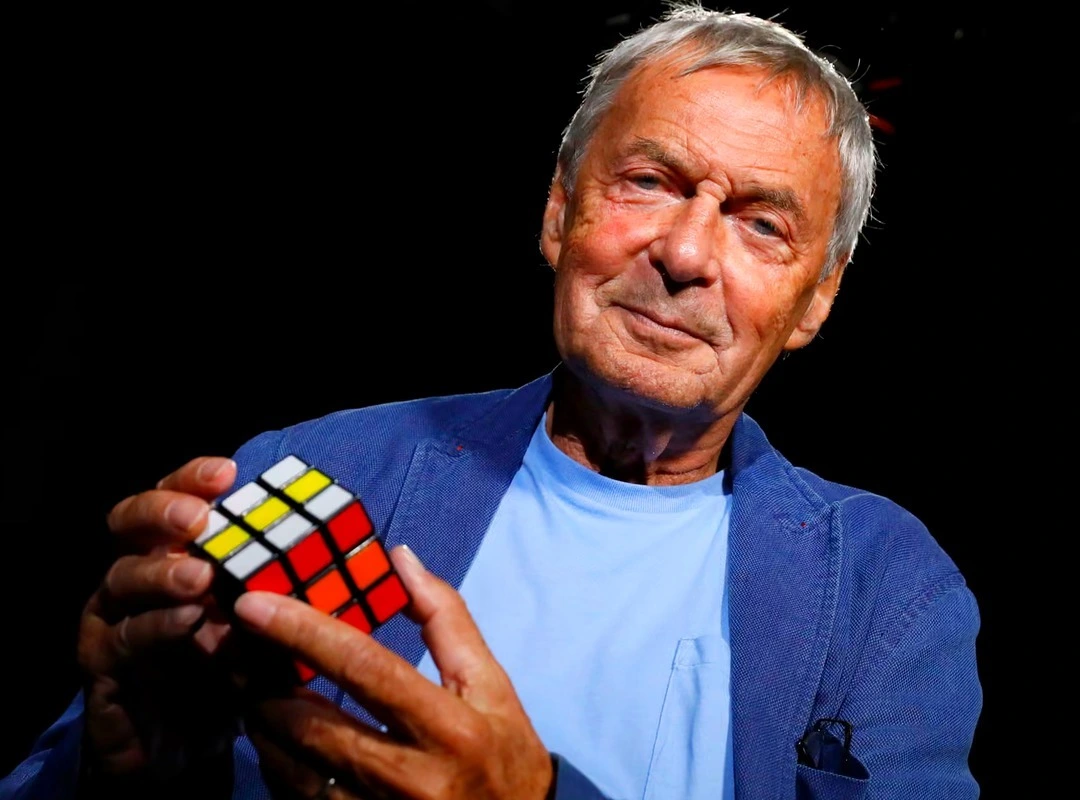
So when did the Rubik's Cube come out? The story starts a few years before most people think. Rubik built his first working prototype in 1974, while he was still a professor trying to help his students visualize how independent parts could move within a larger structure without the whole thing falling apart. That's a genuinely hard concept to teach with a drawing on a chalkboard. Rubik decided to build a physical model instead.
He carved and assembled a cube out of wooden blocks, working out a mechanism that let each layer rotate freely while keeping the whole structure intact. That mechanical puzzle alone was an achievement. Getting the pieces to twist independently without the cube collapsing was the real engineering trick, and it's the reason the toy still feels satisfying fifty years later. Rubik has said it took him about a month to figure out how to solve his own creation once he'd built it, which tells you everything about how nonobvious the problem actually was.
He originally called it the Magic Cube, and as its creator he had no real plan for what came next beyond getting it working. Rubik applied for a patent in 1975, and a small Hungarian company began manufacturing it under Communist era trade restrictions that made getting the toy out of Hungary a genuine challenge. Ironically, the same puzzle that would later flood toy stores across America almost never made it out of Budapest.
The Rise of the Rubik's Cube
The turning point came at international toy fairs. A businessman named Tom Kremer spotted the Magic Cube and believed in it enough to bring it to Ideal Toy Corporation, which licensed it, renamed it after its inventor, and released it worldwide in 1980 as the Rubik's Cube. From there it moved fast. By the early 80s it had become a full blown cultural phenomenon, selling in the hundreds of millions and becoming shorthand for cleverness itself. If someone in a movie needed to look smart, you handed them a cube.
The cube showed up everywhere media could put it. It appeared on The Simpsons, it turned up in Pixar's Wall-E, it made an appearance in The Pursuit of Happyness. None of that was paid placement in the way we think of it today. It happened because the object had already become part of the culture's shorthand for intelligence and patience.
Competition followed quickly too. The first World Rubik's Cube Championship was held in Budapest in 1982, where a student named Minh Thai won with a solve time of 22.95 seconds, a number that felt superhuman at the time. Speedcubing has only grown since, with the World Cube Association now running events across dozens of categories, and current record holders solving the classic 3x3 in well under five seconds. What started as a professor's teaching aid became a legitimate competitive sport with its own governing body and global rankings.
Legacy and Continuing Influence
Rubik never stopped working. He went on to design other puzzles under his own name, including Rubik's Magic and Rubik's Snake, and he later became president of the Hungarian Engineering Academy, using that platform to push STEM education for young people. He's remained fairly private through all of it, letting the puzzle speak for itself rather than chasing the spotlight that came with it.
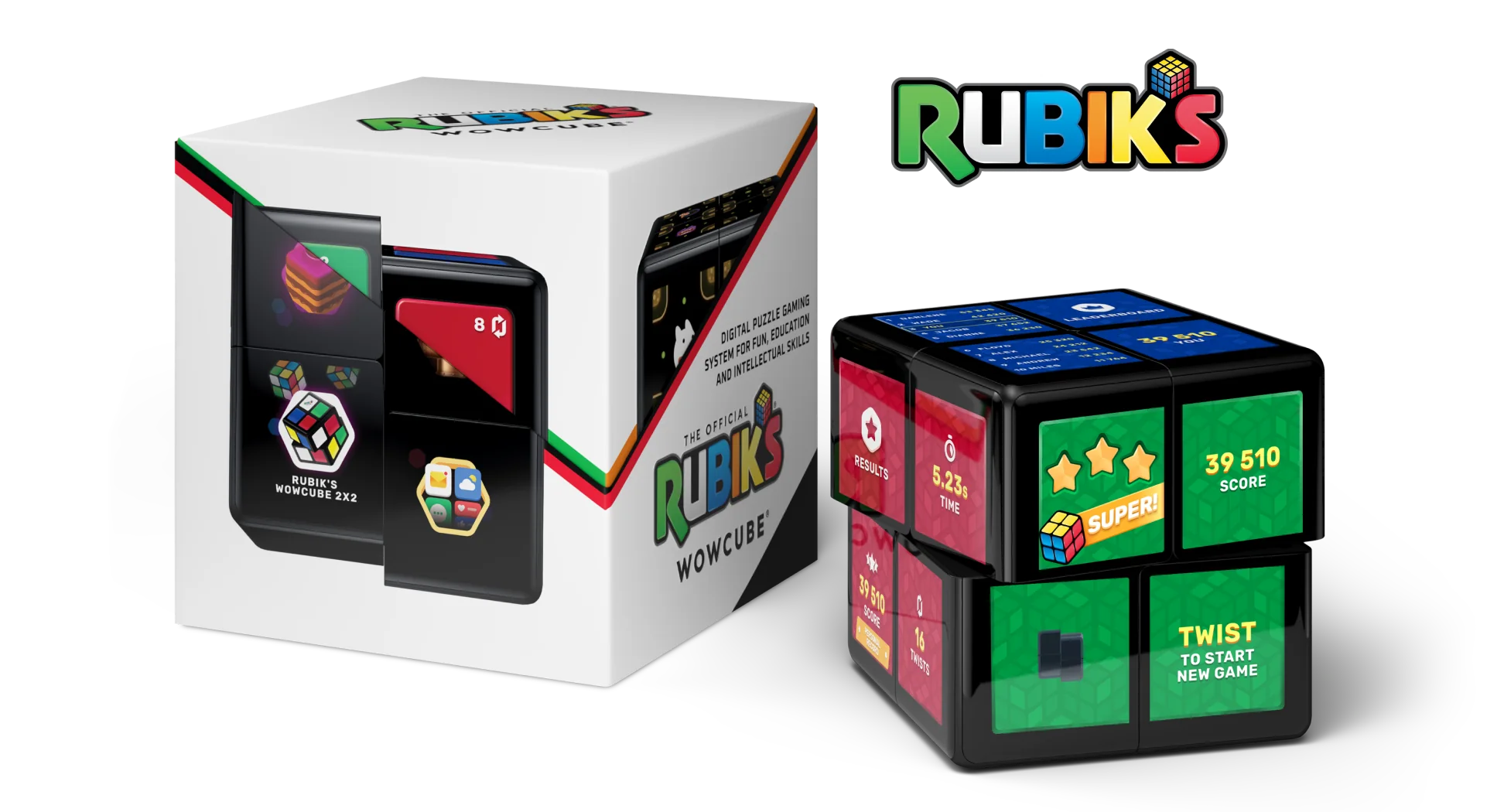
What's interesting is how the core idea behind the cube, a physical object that rewards patience, spatial thinking, and repeated attempts, never really went out of style. It just kept finding new forms. That's part of why we built the Rubik's WOWCube collaboration the way we did. WOWCube itself is a handheld gaming console built around a 2x2 grid of screens, designed for the same kind of hands on, tactile problem solving that made the original cube so addictive. Licensing the Rubik's name for our own device wasn't about slapping a logo on a box. It was about connecting a nearly fifty year old idea, physical puzzles that make your brain work in three dimensions, to a modern piece of hardware that does the same thing with actual pixels instead of painted stickers.
Ernő Rubik built something in a Budapest workshop that he thought might help a handful of architecture students understand structure. Instead he handed the world a permanent symbol for the satisfaction of figuring something out the hard way. Fifty years on, that idea is still worth building on.