What Colors are on a Rubik's Cube?
What Colors Are on a Rubik's Cube?
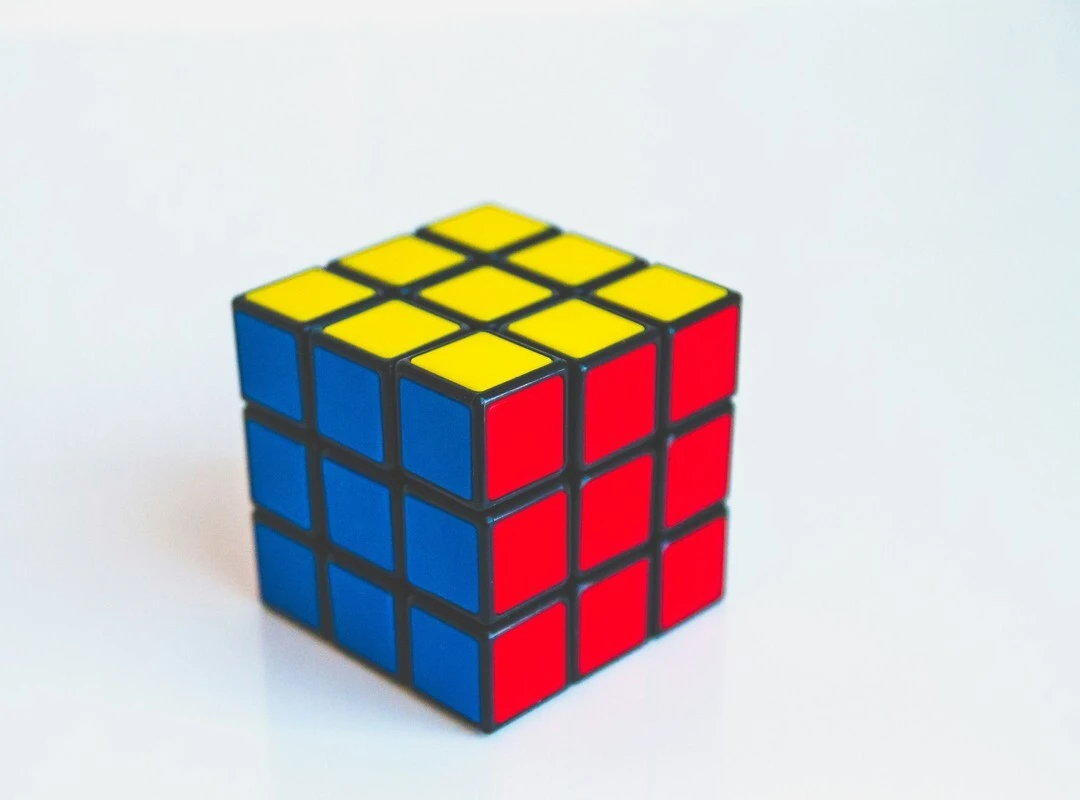
A standard Rubik's Cube has six colors: white, yellow, red, orange, blue, and green, one solid color per face once the cube is solved. Rubik's Cube colors look simple at a glance, but they're not placed randomly. There's a fixed scheme behind them, with strict rules for which color sits opposite which, and that arrangement has been standardized since 1988. Before that, color placement actually varied from cube to cube.
How Many Colors Are on a Rubik's Cube?
Six. White, yellow, red, orange, blue, and green, one color per face on a solved cube, for 54 stickers total across the whole puzzle, nine per face.
The center piece on each face is what locks this in place. It never moves relative to the other centers, no matter how the cube gets scrambled, and it's what defines the color of that face. That's the reason the colors on a Rubik's Cube stay in a fixed layout instead of shifting around with every twist.
Rubik's Cube Color Scheme (Western / BOY)
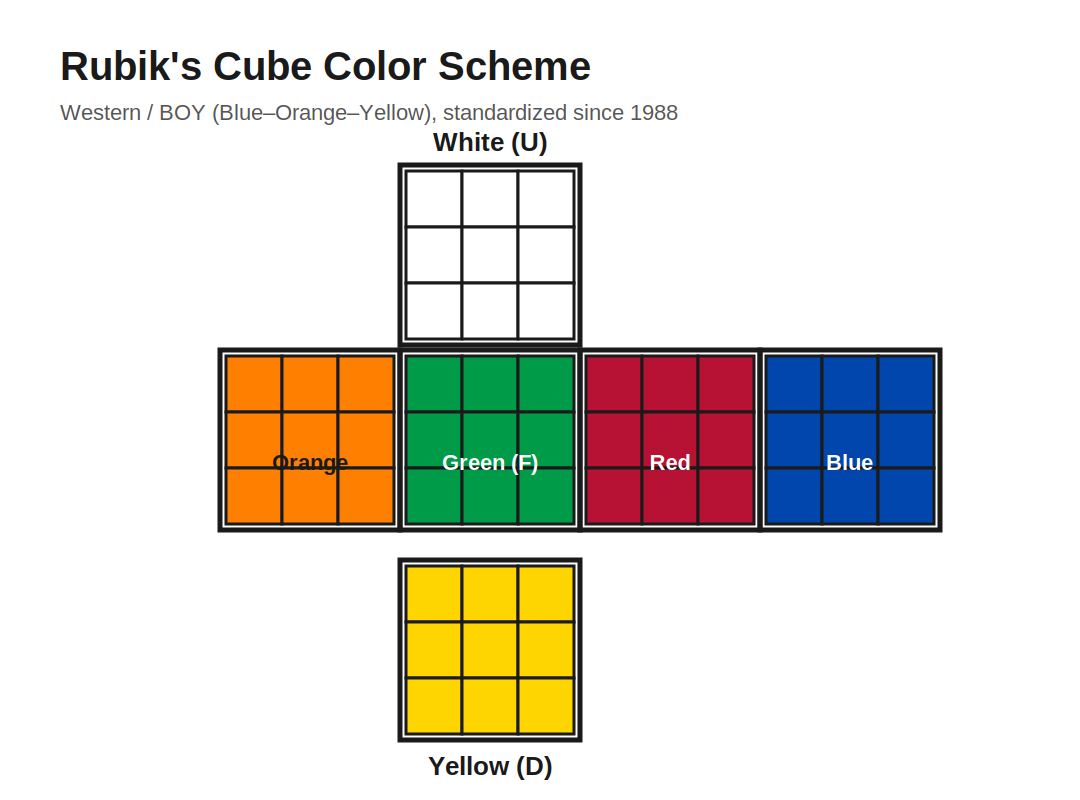
The scheme found on official Rubik's brand cubes, and on most cubes sold today, is called the Western scheme. Most cubers just call it BOY, short for Blue-Orange-Yellow, based on how those three colors sit clockwise around one corner. This arrangement has been standardized since 1988: white opposite yellow, blue opposite green, orange opposite red, with red, white, and blue running clockwise around a corner.
Worth clearing up here: the World Cube Association doesn't actually mandate this scheme. Its official regulations only require one unique color per face in the solved state, nothing more specific than that. Western/BOY just happens to be what the overwhelming majority of competitors use, because it's what official Rubik's cubes ship with. A second scheme, the Japanese color scheme, was used on some of the earliest mass-produced cubes and is still legal in competition, still used by a small number of speedcubers today. If your cube's colors don't line up with a tutorial you're following, check which scheme you've got before assuming you made a mistake.
Rubik's Cube Color Order & Opposite Colors
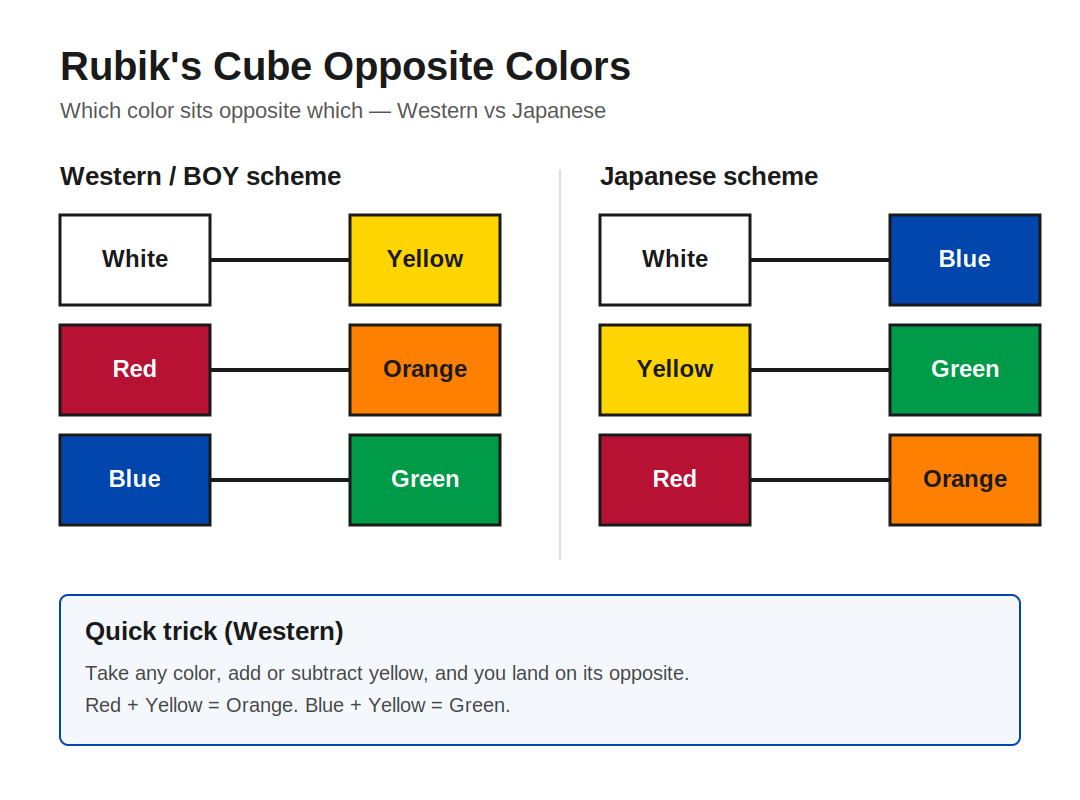
In the Western scheme, three pairs sit opposite each other:
- White opposite Yellow
- Red opposite Orange
- Blue opposite Green
The Japanese scheme uses the same six colors but swaps two of those pairings. White sits opposite blue instead of yellow, and yellow sits opposite green instead of white. Red stays opposite orange in both versions.
A quick trick for the Western order: take any color, add or subtract yellow, and you land on its opposite. Red plus yellow gives orange. Blue plus yellow gives green.
For a practical reference point, hold the cube with white on top and red facing you. In the Western scheme, blue sits on your left and green on your right. That's the color order most tutorials assume by default. If your cube shows the mirror of that, you're likely holding a Japanese scheme cube, not a defect, just a different standard.
Rubik's Cube Layout: How the Colors Are Arranged
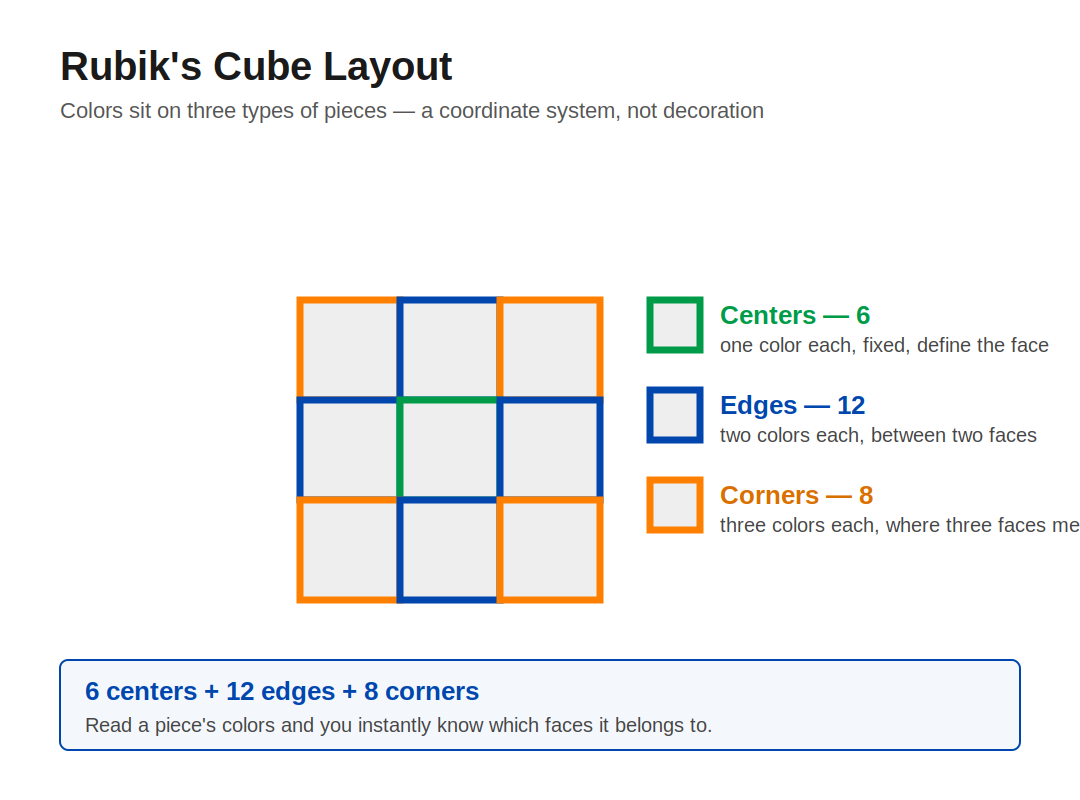
The colors sit on three different types of pieces, and each type carries a different number of them:
- Centers: 6 pieces, one color each, fixed in place, these define each face's color.
- Edges: 12 pieces, two colors each, sitting between two faces.
- Corners: 8 pieces, three colors each, sitting where three faces meet.
This layout works more like a coordinate system than decoration. Once you can glance at an edge or corner piece and immediately know which faces it belongs to, based on its two or three colors, solving stops being trial and error and starts being logic.
Do All Rubik's Cubes Have the Same Colors?
Mostly, but not always. The six classic colors are the standard, and a cube bought off a shelf in the US today will almost certainly have them. Variations do exist though. Some cubes come in pastel palettes, some go monochrome with different shades of one color for an added challenge, some use raised tactile markings instead of color for solvers who are blind or visually impaired, and stickerless cubes often use slightly different shades of the same six colors molded directly into the plastic.
None of that changes the underlying system. The opposite-pair logic and the fixed centers still apply. Only the specific shade on top changes.
WOWCube Plays by Different Rules
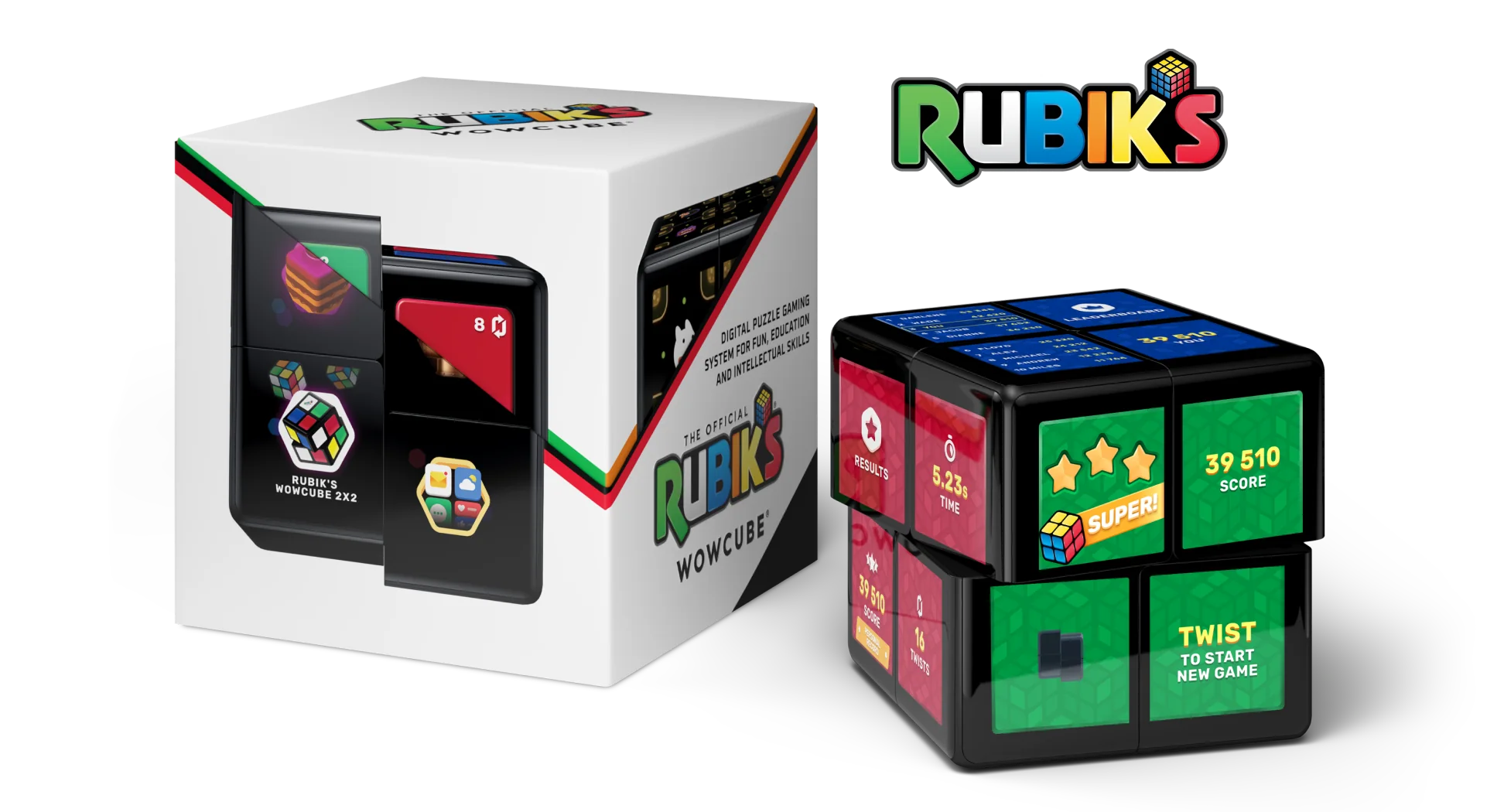
WOWCube isn't about repainting six faces a different shade or adding a seventh color to the mix. It rethinks what a cube's face can be in the first place. Instead of a sticker locked to one color permanently, every face is a small screen, capable of showing games, art, and interfaces that change depending on what you're doing with the cube at that moment.
On a classic cube, the colors are the entire puzzle. On WOWCube, color is just the surface. What's underneath is dozens of games and experiences that reshape what each face looks like from one session to the next, no stickers required.