The Hardest Puzzles in the World
At WOWCube, we make puzzle games for a cube with 24 screens, so we spend a lot of time thinking about what makes a puzzle hard. These are the ones that have beaten some of the smartest people on the planet.
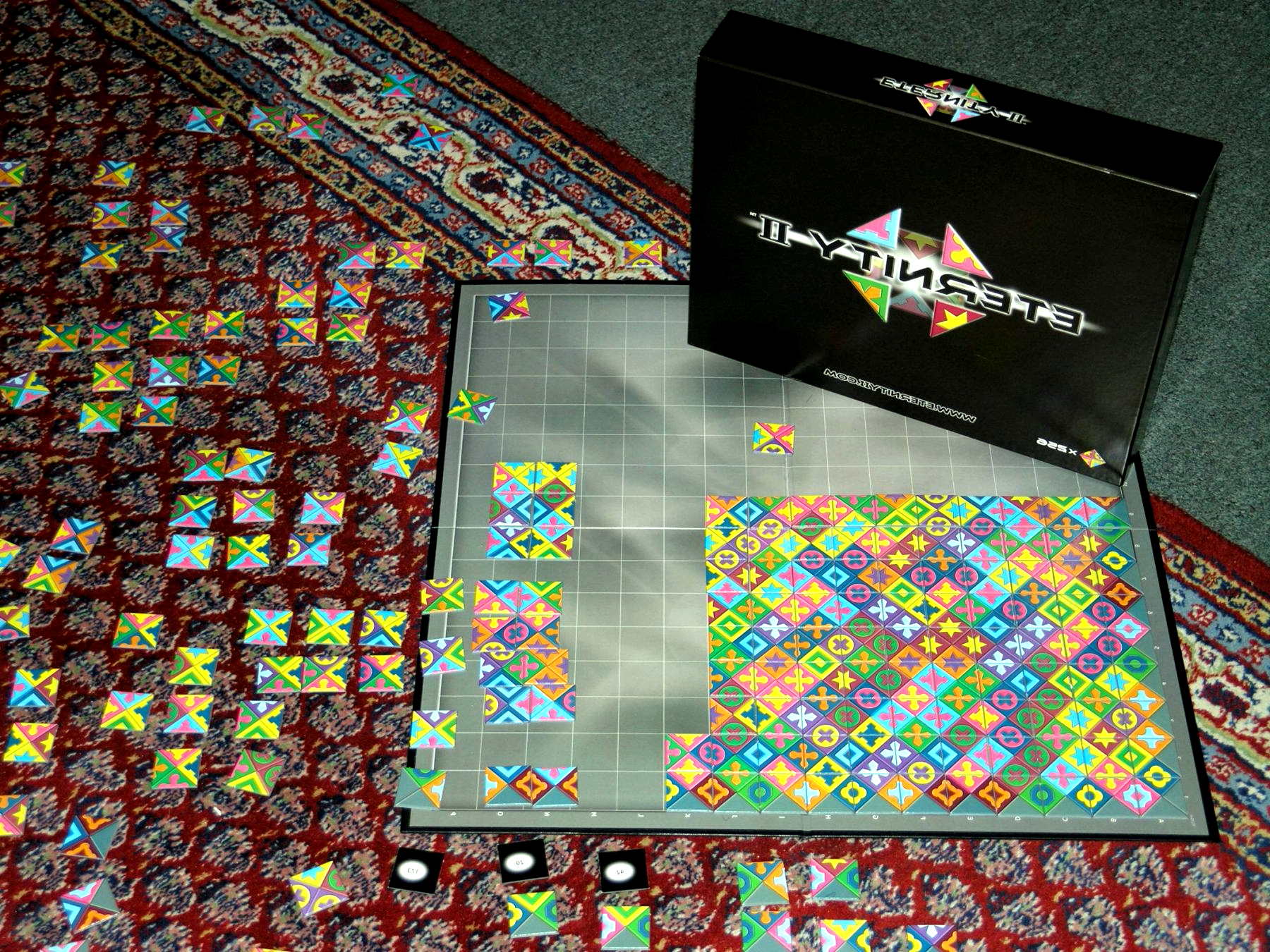
The hardest puzzle in the world is usually said to be Eternity II, though there’s no official title and it depends on the type. Eternity II is a 256 piece edge matching puzzle from 2007 that nobody has ever solved, and its $2 million prize went unclaimed. Among logic puzzles, the record holder is George Boolos’s Hardest Logic Puzzle Ever. For sudoku, it’s Arto Inkala’s 2012 grid. Among ciphers, it’s Kryptos at CIA headquarters, whose final section held out for 35 years until its answer turned up in an archive in 2025.
What Makes a Puzzle the Hardest?
Hard can mean a lot of things, and the most difficult puzzle for one person can be a quick solve for another. We looked at four things: how many possible combinations a puzzle has, whether there’s a known method to solve it, how many people have actually solved it, and how long it takes when someone does. A Rubik’s Cube has quintillions of positions, but it has a method, so millions of people can solve it. Eternity II has no method and no known solution at all.
10 Hardest Puzzles in the World
Here are the world’s hardest puzzles across every type, starting with the one that’s still the hardest puzzle to solve.
1. Eternity II
Eternity II is an edge matching puzzle: 256 square pieces go on a 16 by 16 board, and every edge has to match its neighbor. It came out in 2007 with a $2 million prize for the first complete solution. The math is brutal. Counting rotations, the number of possible layouts has 662 digits, and puzzles like this are NP complete, which means even computers can’t brute force them in any reasonable time. The best result anyone found matched 467 of 480 edges. The prize deadline passed at the end of 2010 with no winner, and the puzzle is still unsolved.
2. The Hardest Logic Puzzle Ever
In 1996, philosopher George Boolos published a riddle and gave it a modest title: The Hardest Logic Puzzle Ever. Three gods stand in front of you, called True, False, and Random. True always tells the truth, False always lies, and Random answers however he likes. You get three yes or no questions to figure out who is who. The catch is that the gods answer in their own language, with the words “da” and “ja,” and you don’t know which one means yes. Boolos based it on an idea from logician Raymond Smullyan. It does have a solution, but very few people get there without reading it first.
3. Arto Inkala’s World’s Hardest Sudoku
Finnish mathematician Arto Inkala spent three months building this grid, and in 2012 newspapers around the world ran it as the world’s hardest sudoku. It has exactly one solution, and you have to think several moves ahead before you can place almost any number. Inkala himself admitted there’s no clean way to measure sudoku difficulty, and puzzle fans have since found grids that rate even harder. Still, this is the one most people mean when they say “world’s hardest sudoku.” It’s solved, and the answer is easy to find online.
4. Einstein’s Riddle
Five houses in a row, each a different color. Five owners of different nationalities, each with a favorite drink, a brand of cigarettes, and a pet. A list of clues, and one question: who owns the fish? You’ve probably heard that Einstein wrote it and that only 2% of people can solve it. There’s no evidence for either. The earliest known version ran in Life International in 1962, which is why it’s also called the Zebra Puzzle. It’s hard because you have to juggle a lot of facts at once, but with a grid and some patience, plenty of people crack it.
5. Kryptos
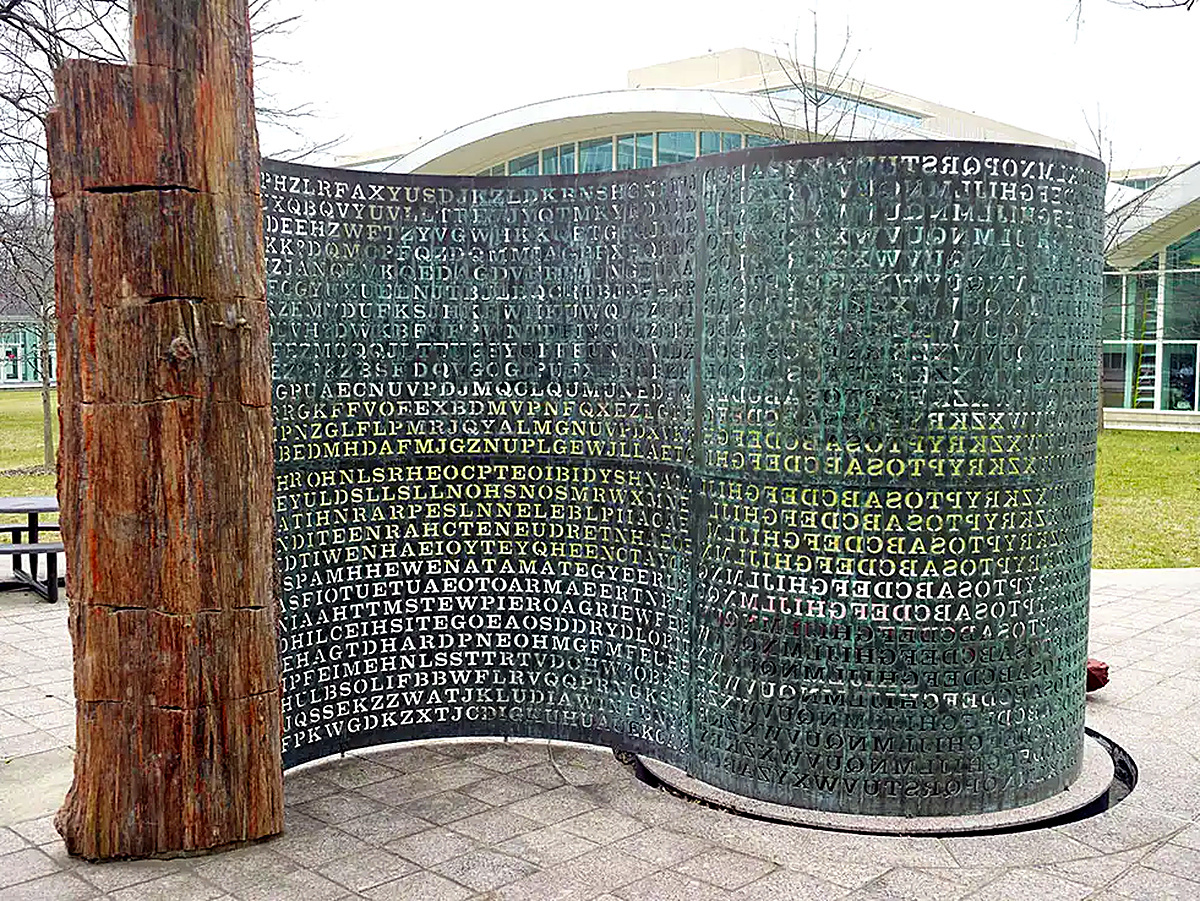
Since 1990, a copper sculpture outside CIA headquarters in Langley, Virginia, has carried four encrypted messages. Artist Jim Sanborn made it, and the first three sections were cracked in the 1990s. The fourth, K4, is only 97 characters long, but it held out for 35 years against the CIA, the NSA, and thousands of amateur codebreakers. In 2025, two writers found its plaintext in Sanborn’s papers at the Smithsonian, without breaking the cipher. That November, the solution sold at auction for $962,500 to a buyer who plans to keep it private. Nobody has explained publicly how the cipher actually works.
6. Cicada 3301
On January 4, 2012, an anonymous image showed up on 4chan with a note saying someone was looking for highly intelligent people. Hidden inside was the first step of a puzzle that led through steganography, cryptography, obscure books, and posters taped up in cities around the world. New rounds followed in 2013 and 2014. The last one ended with Liber Primus, a book written in runes that remains mostly undeciphered. Nobody knows who was behind Cicada 3301 or what the people who finished the early rounds were recruited for, and the last message believed to be authentic came in 2017.
7. Rubik’s Cube
Ernő Rubik invented his cube in 1974 (you can read more about the Rubik’s Cube inventor here). A standard 3x3 has 43,252,003,274,489,856,000 possible positions, about 43 quintillion, and only one of them is solved. Random twisting will never get you there. What keeps it off the top of this list is that there’s a method: learn the algorithms, and anyone can do it. Speedcubers finish in a few seconds. Learning those algorithms is still the hard part, and a lot of people give up before they get there. Here’s how many people can actually solve a Rubik’s Cube.
8. Big Cubes and Other Twisty Puzzles
If a 3x3 feels too easy, the twisty puzzle world goes a lot further. Designers keep building bigger cubes with 3D printers. Oskar van Deventer’s 17x17x17 held the world record in 2011, Grégoire Pfennig’s 33x33x33 took it in 2017, and in 2024 Matt Bahner built a 34x34x34 with 6,939 pieces. There are also twelve sided versions like the Gigaminx and Petaminx. The solving methods are the same as on a regular cube, just repeated many more times, and a full solve can take days.
9. The Hardest Jigsaw Puzzles
A jigsaw usually gives you a picture to work from. The hardest ones take it away. Ravensburger’s Krypt series comes in solid silver, black, or gold with no image at all. Krypt Silver has 654 pieces cut in a spiral, and you match them by shape alone. Clear plastic puzzles go even further, with pieces you can see straight through. Double sided puzzles print an image on both sides, so you never know which way is up. None of them are unsolvable, but a single one can take several days.
10. Hanayama Level 6 Cast Puzzles
Hanayama, a Japanese toy company, makes metal puzzles in six difficulty levels, and level 6 is the top. The goal sounds simple: take the pieces apart, then put them back together. The Cast Enigma, designed by Eldon Vaughn and patented in the US in 1975, is the classic level 6. It looks like a small twisted cylinder, and no amount of force helps. You have to find the exact sequence of turns and slides. Puzzle fans often call it the toughest puzzle in the whole line. It’s solvable, and solutions are published online if you get stuck.
Hardest Puzzles by Type
Here are the most challenging puzzles in each category.
| Type | Hardest example | Why it’s so hard |
|---|---|---|
| Edge matching | Eternity II | No complete solution has ever been found |
| Logic | The Hardest Logic Puzzle Ever | Three gods, an unknown language, three questions |
| Sudoku | Arto Inkala’s 2012 grid | One solution and deep lookahead on almost every move |
| Jigsaw | Ravensburger Krypt | No picture, so every piece is matched by shape |
| Mechanical | Hanayama Cast Enigma | One precise sequence of moves, no force allowed |
| Twisty | 34x34x34 cube | 6,939 pieces and days of solving |
| Cipher | Kryptos K4 | Held out against codebreakers for 35 years |
| Digital | Cicada 3301 | Creators unknown, Liber Primus still mostly unread |
Extremely Hard Puzzles You Can Try Yourself
Most of the puzzles on this list are out of reach unless you have a few spare years. These very hard puzzles you can actually try at home. Ravensburger’s Krypt and clear plastic jigsaws are easy to find online and make a really hard puzzle for a long weekend. Hanayama’s level 6 cast puzzles fit in your pocket and usually cost under $25. Einstein’s Riddle and Arto Inkala’s sudoku are free to print, and they’re a great test if you prefer logic to loose pieces.
If you want something in between, the puzzle games on WOWCube are built around levels that get harder as you go. You start with something you can solve in a minute and work your way up to puzzles that make you stop and think for a while. Browse puzzle games.
Tips for Solving Hard Puzzles
Break it into parts. Don’t try to solve the whole thing at once. On a jigsaw, start with the edges. On a logic puzzle, find one fact you’re sure of and build from there.
Look for patterns. Hard puzzles hide repeating shapes, numbers, or rules, and once you spot one, the rest often falls into place.
Take breaks. Your brain keeps working on a problem after you walk away, and the answer often shows up while you’re doing something else.
Practice on easier versions. Before Inkala’s sudoku, solve a few hard ones from the newspaper. Before a level 6 Hanayama, try a level 4.
Write things down. Grids, notes, quick sketches. Keeping track on paper frees up your head for the actual thinking.
The biggest thing is doing it regularly. A few minutes a day on a puzzle does more than one marathon session a month, and that’s what makes WOWCube a good daily brain workout: pick it up for five minutes, play a few levels, and put it down until tomorrow.